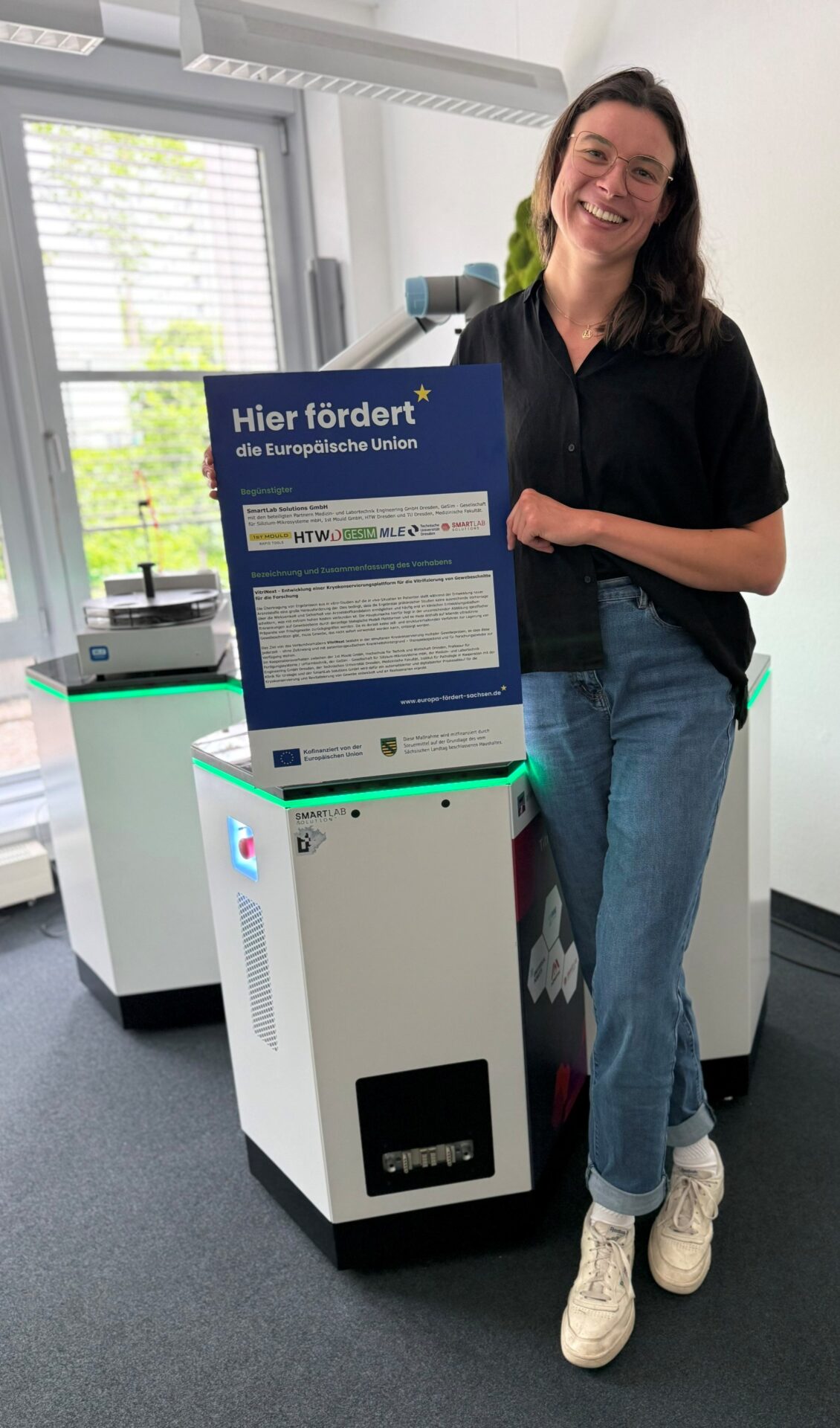
VitriNext
Many promising drug candidates fail in clinical practice because conventional laboratory models do not adequately reflect human biology at the tissue level. This is particularly true in uro-oncology (bladder, prostate and kidney cancer), where selecting the right medication is complex and tumours are often resistant to therapeutic agents. To improve treatments in a targeted manner, models are needed that reveal not only the effects of a drug but also how it behaves within the tissue.
Tissue samples from patients with existing diseases are ideal for this purpose and are frequently obtained through biopsies or surgical resections. However, such samples cannot currently be stored for later use. Any tissue not used immediately is discarded — representing a significant loss for both research and patient care.
VitriNext addresses this challenge directly: We are developing an automated technology for functional and cellular preservation through cryopreservation using vitrification — a process in which tissue is frozen into a glass-like state. This enables multiple tissue samples to be preserved simultaneously and used at any time in the future, without time pressure and while retaining the individual patient’s disease profile.
We are proud to be part of this collaborative project, funded by the Saxon Development Bank – Funding Bank (SAB) under grant reference 100782293.
Together with our project partners, 1st Mould GmbH, Dresden University of Applied Sciences (HTW Dresden) (Chair of Manufacturing Systems / Primary Shaping Technology), GeSiM – Gesellschaft für Silizium-Mikrosysteme mbH, Medizin- und Labortechnik Engineering GmbH, and Dresden University of Technology (TU Dresden) (Faculty of Medicine, Institute of Pathology), we are working in close collaboration with the Department of Urology to bring this project to fruition.